Online Gambling Laws in Serbia: The Current Legal Framework
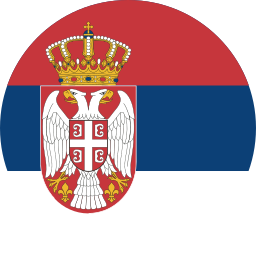
Gambling is legal and centrally regulated in Serbia. Casinos are subject to monitoring at the real state level – operators are checked for fairness, must pay taxes and are supposed to protect customer privacy. Legislative reforms in 2012 ended the monopoly that the Serbian government had on the online casino business, opening the door to a wide range of internationally popular brands to enter legitimately.
An important clarification worth stating clearly, the regulating law is currently the Law on Games of Chance (2020) – not an older 2011 framework that some manuals still quote. It came into law on 11 March 2020 and applies from 11 April 2020. It was further updated in December 2024 (applicable from January 2025). The 2024 reforms brought a considerable modernisation of the system, bringing e-licensing, tougher criteria for KYC and data exchange on self-exclusion, and clearer pricing structures online. The 2020 reform also increased minimum share capital requirements for betting and slot machine businesses from €150,000 to €250,000. Players must be 18+ to place wagers, either at land based or online casino rs platforms.
Who Actually Regulates Gambling in Serbia?
The Games of Chance Administration is an administrative organization inside the Ministry of Finance of Serbia, which is the only authority to license and supervise all games of chance in the country – a truly centralised structure which makes verification easy. It began running in March 2019 and has continued under the 2020 law’s framework.
One correction to bring up directly – some of the older guides to this market imply a “Ministry of Defence” role in gambling oversight – that seems to be a mix-up. Serbia’s gambling regulation is managed through the Ministry of Finance and its Games of Chance Administration and not the defence ministry and we could discover no credible source to the contrary. If you see that assertion anywhere else, take it as an error to be remedied, not a genuine regulatory feature.
Operators are granted 10-year licence terms for online and slot machine licenses, providing a rather lengthy investment horizon. There is also vertical taxation, usually 15-25% of gross gaming revenue, depending on the type of game.
Choosing an Online Casino Serbia Site
The most crucial trust indicator is licensing. Every legal operator will have license to offer games of chance, displayed somewhere on the site (usually in the footer), from a respected authority. Beyond that, take a good look at the game library and bonus offering, as there are big differences in options and promotions available across platforms – watch out for free spins offers and welcome promotions but always read the wagering terms attached thoroughly before assuming a bigger headline number is better value.
Also look at the currencies and payment alternatives they accept, the average durations for withdrawals, and how quick is their customer service. In general, a site with a solid software portfolio (big multinational studios, not just generic or unknown providers) is a good sign of a professional, well-run business.
Payments, Games, and What to Expect
Serbian players have access to a wide game selection across licensed platforms: online slots, table games, poker, and other card games are all well represented, powered by internationally recognised software suppliers. Sports betting, particularly football, remains the single most popular gambling activity in Serbia, with online slots close behind. As long as your chosen site isn’t restricted to players from Serbia in its terms, you’ll typically get access to the same deals and game libraries as players elsewhere in Europe.
For kazino online players specifically comparing local versus international options, both categories are legal to use as long as the specific operator’s terms allow Serbian players and the operator itself holds a genuine licence from a recognised authority.
How We Test and Rate Serbian Casinos
Every platform on this page goes through the same process, run by our editorial team (bios linked at the top of this page) with field testing by RankIGaming:
- Regulatory accuracy – we verify the current governing law (the 2020 Law on Games of Chance, as amended in 2024) and the correct regulator (Games of Chance Administration, Ministry of Finance) directly against primary legal sources, rather than repeating outdated citations.
- Licence verification – every operator checked for valid Serbian licensing or a recognised international licence, with terms confirmed to actually permit Serbian players.
- Bonus terms audit – free spins and welcome offer wagering requirements checked directly rather than assumed from marketing copy.
- Payment and game library testing – confirmed directly for accuracy and Serbian player accessibility.
- Quarterly re-test – every listing is re-verified at least once per quarter, with full write-ups in our casino reviews section; the “last updated” date at the top of this page reflects the most recent full pass.
Red Flags: How to Spot an Unlicensed Site
- No visible licence information at the bottom of the site: a legitimate casino club rs platform should make this easy to find and verify.
- References to an outdated 2011 legal framework as if current: the governing law has been the 2020 Law on Games of Chance for several years now, with 2024 amendments layered on top.
- Claims that the Ministry of Defence oversees gambling in Serbia: this appears to be an error circulating in some older guides – the correct body is the Ministry of Finance’s Games of Chance Administration.
- No clear statement of Serbian player eligibility: always check a site’s terms directly rather than assuming access.
Other Markets We Cover
Serbia is one of many regulated markets our team tests and ranks. Browse our coverage of
- Canada,
- Finland,
- Australia,
- UK,
- Brazil,
- Poland,
- Greece,
- Spain,
- Switzerland,
- Denmark,
- Austria,
- Germany,
- Belgium,
- Italy,
- Hungary,
- Slovenia,
- New Zealand,
- Netherlands,
- Ireland,
or browse our full country directory. Check out our newest casinos hub for the latest launches we’re tracking.